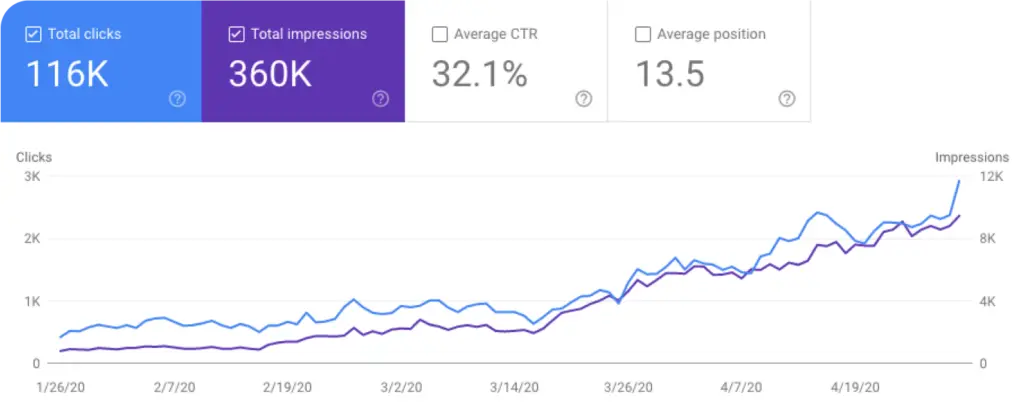
AI Era SEO


What Is AI Era SEO?
Key ideas:
- You optimize for traditional ranking and AI’s answers, recommendations, and summaries.
- Organization, entities and authority signals count as much if not more than keywords.


How AI Is Changing Search
AI systems now summarize the web, blend multiple sources, and give direct answers often without sending traffic. They look for sources that are clear, consistent, and backed by expertise they can verify.
For businesses, that means:
- Being “on page one” counts for little when it comes to being the brand AI draws into its answers and ideas.
- Your presence across the wider web (reviews, mentions, PR, social proof) feeds into how often you get cited.
Technical Foundations for AI Visibility
AI systems continue to rely on the same technology layer as search engines: if crawlers fail, AI can’t see you.
Focus on:
- Core Web Vitals (fast loading, responsive, stable pages) and mobile-first delivery.
- Clean indexation: avoid duplicate URLs, thin archives, and messy parameter pages that waste crawl budget.
- Logical URL structure and internal links consistent with your main topics and subtopics.
Entity-Led Topic Clusters
AI models don’t just think in keywords, they think in entities and relationships.
Practical approach:
- Define your core entities: your brand, product lines, services, locations, and core problem spaces.
- Build clusters: one pillar page per core topic with deep-dive articles answering questions.
- Cross-link pillar ↔ cluster pages with descriptive anchor text to let machines see how the page is organized.
Answer Engine Optimization (AEO)
AEO is about making your content easy to quote, summarize, and reuse in AI answers.
Tactics:
- Lead sections with clear, one- or two-sentence answers before adding detail.
- Use consistent, well-structured headings so each section can stand alone as a “mini article.
- Add FAQ blocks that address concise, high-intent questions with direct responses.
Generative Engine Optimization (GEO)
Generative Engine Optimization (GEO). SEO gets you indexed, GEO makes you the source.
Key principles:
- Use modular, clearly labelled sections (H2/H3, lists, FAQs, etc.) that are very easily lifted into AI responses.
- Provide unique data, examples, and frameworks that distinguish you from generic content.
- Maintain consistent brand and expert profiles across platforms so AI systems can easily recognize and trust your voice.
Structured Data and Schema
One of the clearest methods to explain yourself to machines is through schema.
Recommended baseline:
- Organization and WebSite schema to clarify who you are and what you do.
- Article / BlogPosting, FAQPage, and BreadcrumbList schemas on relevant pages to define content types and relationships.
- Where applicable, Product, Service, and Review schema to surface pricing and trust signals.
E‑E‑A‑T and Trust Signals
E‑E‑A‑T and Trust Signals. AI systems heavily rely on signals of real-world expertise and trust.
Strengthen:
- Authorship: bios that show experience, credentials, and roles.
- Proof: case studies, client results, and original data. whitehat-seo+1.
- Third-party validation: reviews, press mentions, and high-quality backlinks.
Tracking AI-Era Visibility
You can’t manage what you don’t measure, especially as “rankings” tell only part of the story.
Track:
- Traditional SEO metrics (rankings, traffic, conversions) plus AI-specific visibility and citation metrics where tools allow.
- Brand mentions across platforms (reviews, forums, social, directories) to gauge how often you appear as a recommended option.
AI Tools in Your SEO Workflow
AI isn’t just the channel, it’s also part of how you work.
Use AI tools to:
- Speed up research: clustering keywords, mapping topics, and finding gaps.
- Draft outlines and first-pass copy that humans refine and fact-check.
Always keep a human in the loop for strategy, quality, and originality.
Implementation Roadmap
Here’s a simple order of operations to become “AI-ready.”
- Audit technical health and crawl/index hygiene.
- Define your core entities and build topic cluster plans around them.
- Rewrite or structure key pages for answer-style formatting and extractability.
- Add and validate core schema across your site.
- Publish and promote proof (case studies, data, testimonials).
- Set up tracking for both classic SEO and AI-era visibility metrics.
How an AI Era SEO Partner Can Help
Most teams don’t have time to re-architect their site, content, and measurement while keeping up with day-to-day marketing. An experienced AI Era SEO partner can help you:
- Audit your current visibility and identify AI-era gaps.
- Design topic clusters, schema, and content formats that AI systems understand and trust.
- Build repeatable processes so every new page is “AI-ready” from day one.
Always keep a human in the loop for strategy, quality, and originality.
Ready to Win in AI Search? Partner With Paper Box SEO
AI Era SEO isn’t a box to check, it’s how you make your brand the default choice when AI decides what to show and cite.
Paper Box SEO unites technicals, entities, and content into one system that makes your site fast, clear, and citable across search and AI engines.
Turn AI search into your edge and schedule a call to build an SEO roadmap that moves the needle.